Here's how the two actually compare, and how to use them together without wasting either one.
What Vitamin C Actually Does
Topical vitamin C (ascorbic acid and its derivatives) is one of the most researched brightening and antioxidant ingredients in skincare. It works primarily by inhibiting tyrosinase, the enzyme responsible for melanin production, which helps fade hyperpigmentation and even out skin tone over time. It also provides antioxidant protection, neutralizing free radical damage from UV exposure and pollution before it can contribute to premature aging and further pigmentation.
Vitamin C is most commonly used in the morning, since its antioxidant protection compounds well with daytime environmental exposure, and it pairs naturally with SPF as a complementary layer of protection.
What Rosehip Oil Actually Does
Rosehip oil works through a different mechanism entirely. Its high linoleic and alpha-linolenic acid content supports the skin's barrier function from within, while its naturally occurring vitamin A (trans-retinoic acid) drives cell turnover — fading hyperpigmentation, smoothing texture, and softening fine lines over consistent use. Its antioxidant content (tocopherols and carotenoids) provides additional protection against oxidative stress.
Rosehip oil is typically used both morning and night, and unlike many actives, it's well-tolerated by most skin types, including sensitive and reactive skin.
Where They Overlap — And Where They Don't
Both ingredients target hyperpigmentation and both provide antioxidant support, which is exactly why people often assume they're interchangeable. In practice, they work on that shared goal through different pathways: vitamin C primarily blocks new pigment production, while rosehip oil's vitamin A content speeds the turnover of already-pigmented cells. Using both means addressing hyperpigmentation from two directions rather than one.
Where they diverge is barrier support and texture. Vitamin C doesn't meaningfully support the skin barrier the way rosehip oil's essential fatty acids do, and rosehip oil doesn't inhibit melanin production the way vitamin C does. Neither one is a full replacement for the other — they're complementary, not redundant.
Can You Use Vitamin C and Rosehip Oil Together?
Yes, and for most people this is the ideal approach rather than a compromise. A common, well-tolerated structure is to use vitamin C for its antioxidant and brightening benefits a few times a week, and rosehip oil daily, morning and night, as the consistent barrier-support and cell-turnover layer underneath everything else.
There's no meaningful interaction risk between the two — vitamin C and rosehip oil are commonly layered without irritation, unlike combinations involving stronger actives like retinoids or high-percentage acids.
Which One to Prioritize If You Can Only Choose One
Choose rosehip oil first if: your main concern is dryness, barrier damage, sensitivity, or you want one product that supports multiple concerns (hydration, texture, fine lines, mild pigmentation) at once. It's the more foundational, daily-use choice for most skin types.
Choose vitamin C first if: your primary concern is dullness, uneven tone, or you want dedicated antioxidant protection layered under SPF each morning, and your skin already tolerates a well-rounded moisturizing routine.
For most people building a routine from scratch, rosehip oil is the better starting point — it's more broadly tolerated and addresses barrier health, which supports everything layered on top of it, including vitamin C itself.
Trilogy's Approach: Rosehip Oil and Vitamin C Together
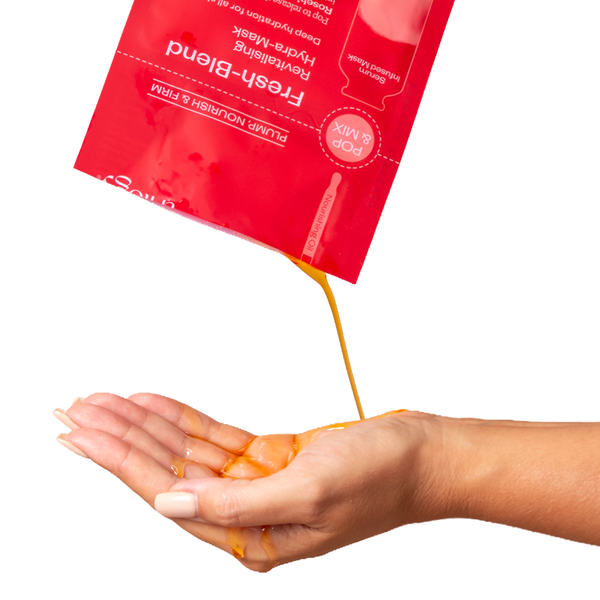
Trilogy's Certified Organic Rosehip Oil is designed for daily, twice-a-day use as the foundational barrier-support and cell-turnover step in a routine. For dedicated vitamin C benefit, the Fresh-Blend Vitamin C+ Glow Mask delivers a concentrated dose of brightening and antioxidant support as a treatment step a few times a week, rather than a daily leave-on layer — a format that suits people who want vitamin C's benefits without adding another daily product to their routine. Using the rosehip oil daily and the vitamin C mask a few times a week covers both mechanisms without overcomplicating the routine.
Frequently Asked Questions
Is rosehip oil as effective as a vitamin C serum for brightening?
They work differently rather than one being strictly "more effective." Vitamin C blocks new pigment production and provides antioxidant protection, while rosehip oil speeds cell turnover via its naturally occurring vitamin A. Using both addresses brightening from two angles.
Can I use vitamin C and rosehip oil on the same day?
Yes. There's no meaningful interaction risk, and many routines use vitamin C in the morning (or as a treatment mask) alongside daily rosehip oil use morning and night.
Do I need both rosehip oil and vitamin C, or is one enough?
Many people see good results from rosehip oil alone, since it addresses barrier support, hydration, texture, and mild pigmentation at once. Adding vitamin C provides additional targeted brightening and antioxidant protection, particularly useful for stubborn dullness or uneven tone.
What order should I apply vitamin C and rosehip oil?
If using a vitamin C treatment and rosehip oil in the same routine, apply the vitamin C step first on clean skin, followed by rosehip oil to seal in hydration and provide barrier support.
Is rosehip oil or vitamin C better for sensitive skin?
Rosehip oil is generally better tolerated by sensitive and reactive skin, since it has anti-inflammatory omega-3 content and doesn't carry the mild tingling or sensitivity some people experience with vitamin C, particularly at higher concentrations.
Does rosehip oil have vitamin C in it?
Not meaningfully as a leave-on active — rosehip oil's benefits come primarily from essential fatty acids and naturally occurring vitamin A, not vitamin C. The rosehip fruit itself is high in vitamin C, but that's concentrated in the flesh, not the seed oil.